
Aransas County arrest-warrant records have separate custodians
Aransas County keeps its warrant records in separate hands, and no single search reaches them all. The Sheriff's page covers law-enforcement, court security, service of process, bail, and jail duties, but the office posts no online arrest-warrant roster. JP2's list only covers JP2. Rockport's active page is municipal, so it says nothing about county cases. A county or district matter can involve the clerk, the court, the prosecutor, or a law-enforcement office depending on the file. Use the citation, case number, or court name to find the true owner. If the court is unknown, ask for routing rather than trusting the first page you land on. The word "county" on a site never means every record sits in one place.
Aransas County Arrest Warrants Explained
An arrest warrant is judicial process. It lets law enforcement take a person into custody under the applicable probable-cause and warrant rules. Texas Chapter 15 governs execution and officer authority, while Chapter 45A covers justice and municipal court process. The instrument is not a search warrant, traffic hold, summons, or failure-to-appear notice. Ask the issuing court for the formal label and the case-specific status. One caution matters here. A public list may omit service, a recall, or later court action. Read any result together with its issuing court, date, and coverage rather than treating it as a live prediction in Aransas County.
Aransas County probable-cause process starts with a court
Probable cause in Aransas County starts with a judge, not a website. For lower-court matters, Texas procedure calls for a sworn complaint or affidavit plus a judge's probable-cause determination. An offense the judge personally observed follows a separate statutory path. Felony and district matters use their own applicable process. The issuing judge or court holds the order and the record. The Sheriff's public contact page does not. A public page may show less than the full case file. Texas Code of Criminal Procedure Chapter 45A sets out justice and municipal court procedures, so read the current statute alongside the court's case instructions. No arrest process reduces to a generic online result. The JP1 official page describes that court's magistrate and warrant functions, which is where Aransas County residents can check JP1's own process for a case in that court.
For an Aransas County case outside JP1, contact that court directly, since every court sets its own status route.
Inside an Arrest Warrant Record
No universal field list exists. JP2 publishes a case number, the degree or offense, and the judge or issuing authority. Rockport's public pages use docket or warrant numbers, dates, and offense fields. A blank JP1 bond form shows bond and appearance information, but it is not a warrant record. The court should explain any local code or amount in Aransas County.
| Issuing court | Names the authority whose status must be confirmed |
|---|---|
| Case or warrant number | Identifier varies by system; do not infer a countywide format |
| Offense or process | Read the source label and ask about any local code |
| Date or status field | May refer to report generation, issuance, or a status change |
| Bond information | Ask the court; a blank form does not establish a current amount |
Aransas County custody questions differ from case records
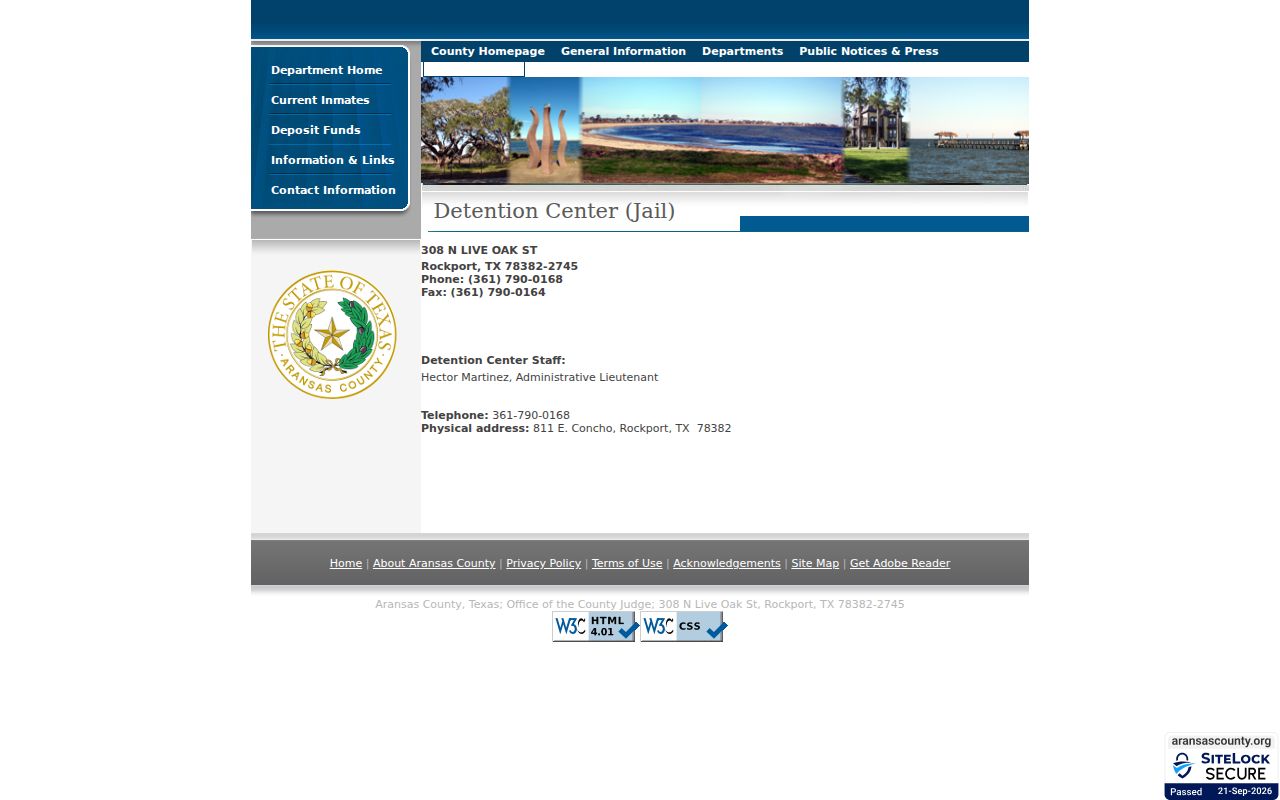
Custody and case records are two different questions in Aransas County. The Sheriff's Office lists jail and bail responsibilities. The issuing court controls its own warrant record. A booking question and a court-status question rarely have the same answer. The detention page and older county materials conflict on the physical address, so call before you travel and ask whether your issue is booking, bail, or court status. A jail contact cannot recall a JP or city warrant. The county detention contact page is the right source for custody routing, and the contact details there are not an inmate or warrant record.
For court action in Aransas County, call the issuing clerk. Ask what confirmation follows an appearance, payment, or recall request.
Serving Arrest Warrants in Aransas County
Serving a warrant in Aransas County can fall to several officers. The Sheriff, constables, and municipal police all hold service or law-enforcement roles, and no single agency issues every local warrant. A court issues the judicial process. An officer then serves or executes it under the applicable law. Chapter 15 addresses how authority is identified and how a warrant is produced on request, in the terms the statute sets. Do not assume a routine daytime call removes the chance of execution. Ask the issuing court or your counsel about your individual case. The Sheriff's non-emergency line handles routing; it is not a dedicated live warrant status line.
Comparing Arrest, Summons, and Bench Warrants
These three records mark different steps. An arrest warrant authorizes custody. A summons directs a person to respond or appear. A bench warrant usually follows a missed appearance or a violated order. In an Aransas County file, the formal label may instead be a capias or capias pro fine. The table is a plain-language distinction, not a ruling on any case.
| Record | Common role | Local status source |
|---|---|---|
| Arrest warrant | Judicial authorization for custody | Issuing court and appropriate law-enforcement contact |
| Summons | Notice to appear or respond | Court named on the document |
| Bench warrant or capias | May follow a court-related event | Issuing court, with exact process label |
| FTA/FTP or license hold | Separate court or DPS status | Issuing court; DPS cannot confirm a warrant |
Aransas County federal arrest process is separate
Aransas County sits in the Corpus Christi Division of the Southern District of Texas. Federal warrants and summonses are federal processes. A county Sheriff or a city active list cannot confirm one. The federal clerk routes docket questions. The U.S. Marshals handle federal service and custody. PACER or RECAP can show docket context, though neither guarantees current warrant status. The official federal division page lists courthouse access details, so check it before visiting in person.
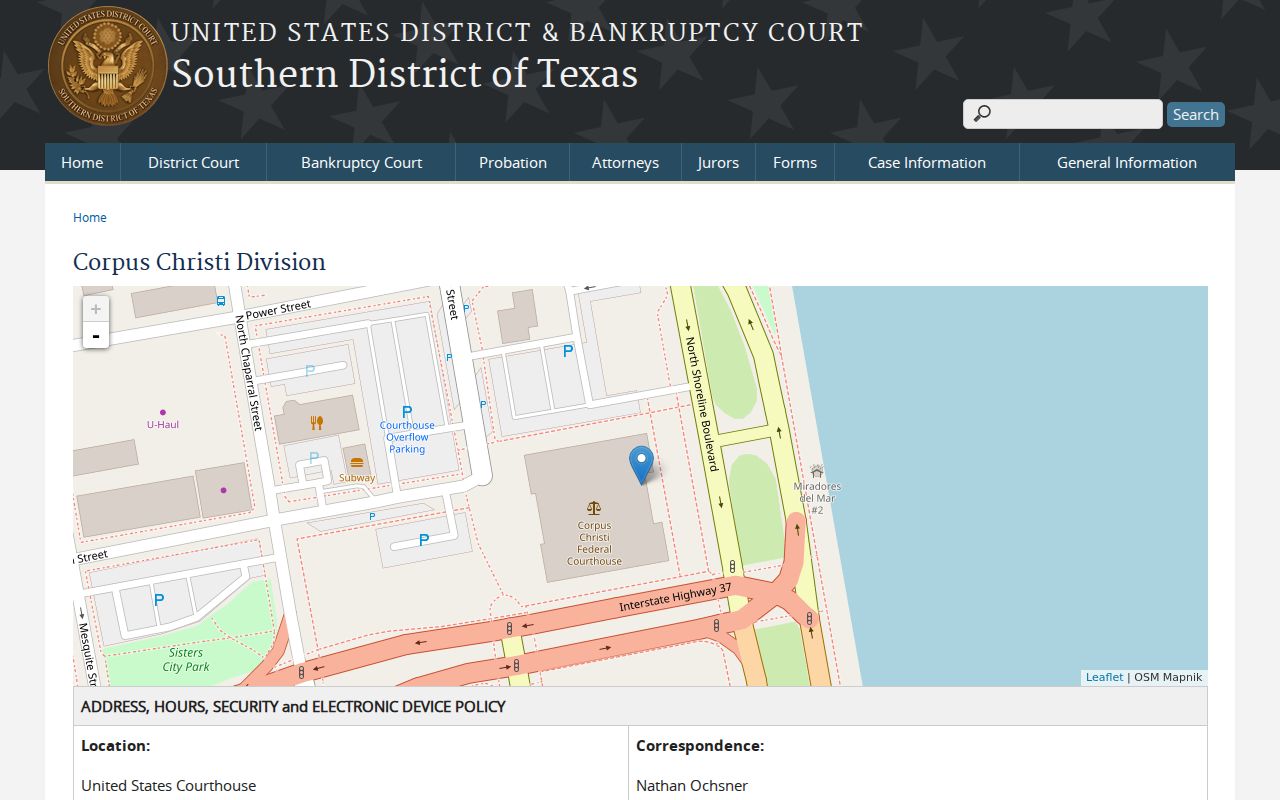
Check the federal page before travel because division locations and access instructions can change.
Aransas County public lists do not settle current status
None of Aransas County's public lists will settle whether a warrant is open today. JP2's files carry a March 2, 2026 label, and Rockport's Incode report is dated November 5, 2025. Both can go stale fast. The Sheriff's page and the county sitemap offer no online arrest-warrant roster covering all of Aransas County. Only the issuing court can confirm the current status.
If you think a warrant may concern you: Contact counsel or the issuing court for case-specific instructions; do not rely on an old list to decide whether to appear or travel.
If There’s an Arrest Warrant for You
If a warrant names you, start writing. Record the case number, the court, and the date on the list you saw. Then call that court and ask how to confirm status and resolve the case through an approved route. The path could be an attorney appearance, a motion, a court date, bond, or something else entirely. Get every instruction in writing and keep your receipts. Remember that JP1's safe harbor covers only its own active Class C cases, not every warrant in Aransas County. For the broader sequence, see the home page's Aransas County warrant resolution steps. Juvenile records follow separate confidentiality rules under Texas Family Code §58.010, so adult public-list methods do not apply there.